Main
News
FMF: No Cases of Kidney Amyloidosis

FMF: No Cases of Kidney Amyloidosis


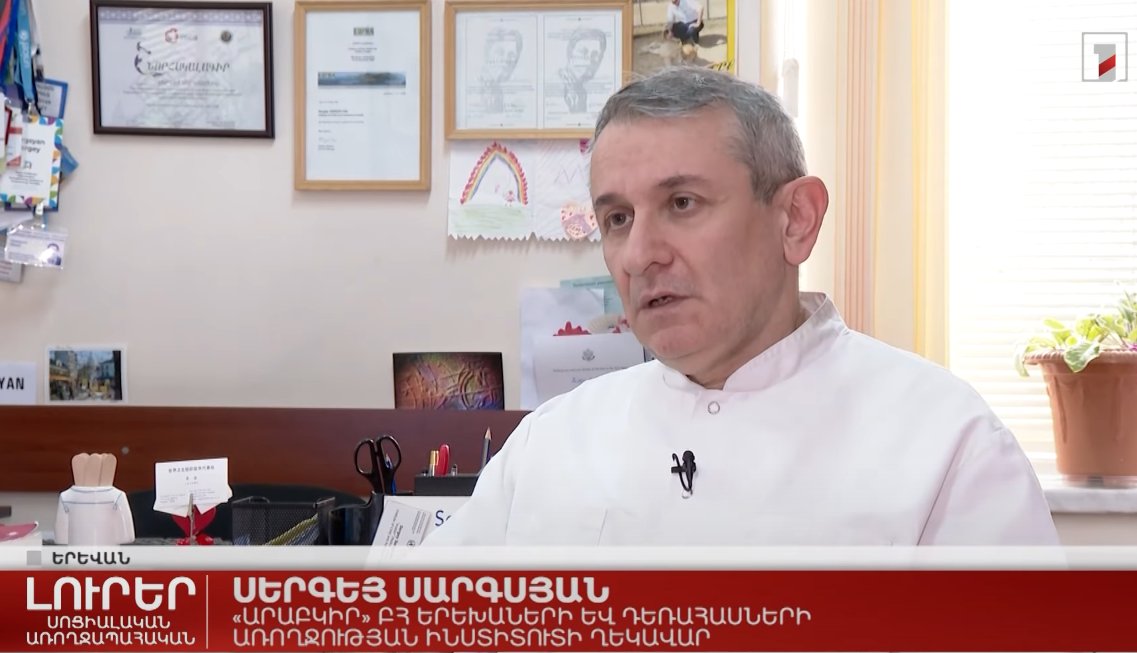
Pediatrician Sergey Sargsyan, the head of the Institute of Children and Adolescent Health at the "Arabkir" Medical Complex, addressed questions from the Public Television Company "News" regarding Periodic disease / Familial Mediterranean Fever (FMF), a genetic condition prevalent among Armenians and relatively common in our population.


Thanks to the dispensary control service established decades ago, cases of complications related to the disease and its consequential kidney failure have significantly decreased from 16% to 0 among children under the age of 18 with FMF.


Approximately 3600 children diagnosed with FMF are currently undergoing treatment in Armenia, including compatriots under the age of 18 residing in other countries with the same diagnosis. The doctor emphasizes that approximately 400 children receive this diagnosis annually, with a noticeable upward trend in recent years.
 

According to pediatrician Sergey Sargsyan, the head of the “Arabkir” Medical Center-ICAH “Periodic disease” is a hereditary disorder. Although some may refer to it as the “Yerevanian disease”, it is unrelated to the city of Yerevan. In the international classification, it is known as “familial Mediterranean fever”, affecting people from this region, including Armenians, Sephardic Jews, Arabs, and Turks, who naturally inherited the gene through centuries of mixing with different populations.


The disease can manifest with recurrent fever, abdominal pain, and may even lead to kidney failure. It is prevalent among the Armenian population, with most cases developing before the age of 20, depending on the type of gene.


Dr. Sargsyan explains, “One in five individuals has one gene, but a single gene is insufficient. For the disease to develop, two genes—maternal and paternal—must combine, in most cases.”


While in the 1990s, approximately 16% of children in our country experienced kidney complications before reaching adulthood, the current scenario has changed. 


Sargsyan details, “The discovery of the gene, conducted by the Center of Genetics in Armenia, along with subsequent organizational efforts and the implementation of a unique ambassadorial model, where patients visit the center for treatment and check-ups, has led to a remarkable reduction. Today, I can report that the initial 16% has decreased a hundredfold. We now have unique cases where children develop kidney complications, at least in infancy.


The Children's Republican Center for Periodic Diseases at the “Arabkir” Medical Center provides treatment for children aged 0-18 years under the state order.


Sergey Sargsyan adds, “People over the age of 18 can also receive appropriate medication and undergo monitoring at the regional health center.

Various treatment and control models are available. The crucial aspect is to diagnose the disease promptly and at its earliest stage.
Last news
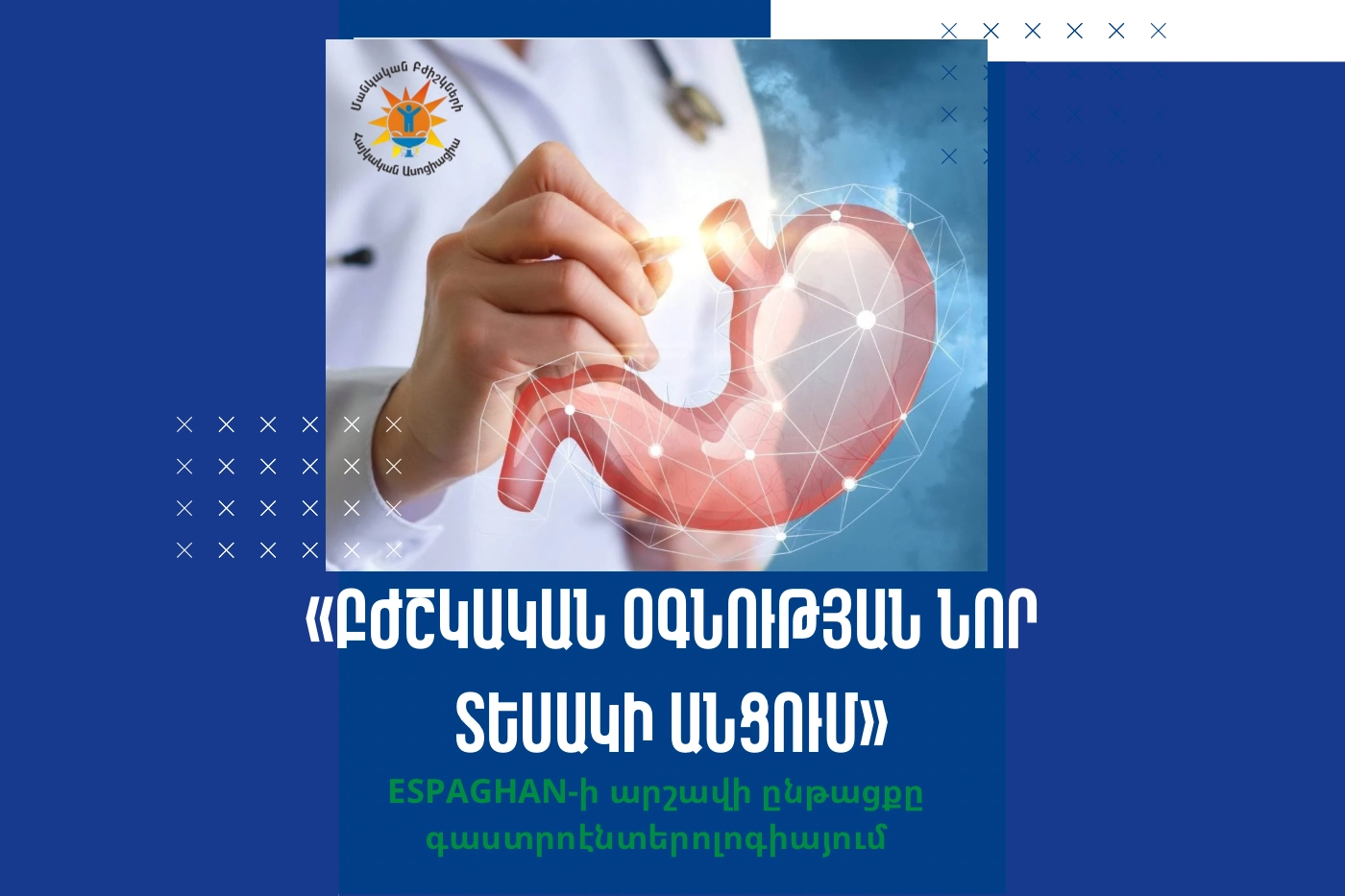
A step towards a new quality of medical care: The progress of the ESPAGHAN «Health Care Transition» Campaign in Gastroenterology
09 April
Ensuring continuity of medical care, especially for children with chronic diseases after the age of 18y.o., is one of the important challenges of healthcare. The work carried out in this direction in the field of gastroenterology in Armenia is ongoing, due to the joining of the Pediatric Gastroenterology service of «Arabkir» MC - ICAH to the «Health Care Transition» Campaign launched by ESPAGHAN (European Society of Pediatric Gastroenterology, Hepatology and Nutrition) since October 2025. Let us recall that in October 2025, the Pediatric Gastroenterology Section was established under the Armenian Pediatric Association, which unites 17 pediatric gastroenterologists, endoscopists and hepatologists of the republic. In December 2025, the Pediatric Gastroenterology Section of the Armenian Pediatric Association organized the first meeting of gastroenterologists from the four pediatric and five adult tertiary care Medical Centers at the «Arabkir» MC - ICAH, during which the professional resources of the ESPGHAN above-mentioned campaign, translated into Armenian, were presented, discussed, and disseminated. The «Health Care Transition» Campaign launched by ESPGHAN continued in February and March of 2026. One of the key achievements of the Campaign is the cooperation that has begun between pediatric and adult gastroenterologists. In February and March, the presentations, discussions, and dissemination of ESPGHAN resources (in printed and electronic versions) continued in the gastroenterology departments of various medical centers and clinics in Yerevan, involving a wider professional network (about 55 people).Currently, the Campaign in Armenia faces certain objective difficulties, as the dispensary (follow-up) care / medical supervision of adult patients with chronic gatroenterological and hepatological diseases still needs to be regulated. The activity, interest and numerous positive responses and feedback from doctors prove that the «Health Care Transition» Campaign in Armenia is relevant and needs further development.
Yerevan to Host a Conference on Clinical Neurology
08 April
The 4th Annual Conference on Clinical Neurology, named after Edgar Hovsepyan, will bring together neurologists, neurosurgeons, and leading specialists in the fields of anesthesiology and radiology from different countries in Yerevan, Armenia. A number of important topics will be discussed during the conference, including: Modern approaches to the treatment of Epilepsy Clinical and diagnostic perspectives The role of Electroencephalography in the diagnosis of epilepsy Therapeutic advances Challenges in identifying epileptic foci in the preoperative period Determining the appropriate time to discontinue drug therapy in the postoperative periodAdditional issues related to the conference topic will also be addressed.CME credits will be awarded to participants. The participation fee is 25,000 AMD. Registration will open soon. The conference will take place on May 21–22, 2026, from 08:30 to 18:00, in the “Tushpa” Hall of the Holiday Inn Yerevan - Republic Square. Arabkir Medical Center — A Reliable Partner in Health
April 7 Is World Health Day
07 April
World Health Day is dedicated to raising awareness of the most important global health issues and uniting efforts to address them. In 2026, the day is marked under the theme: “Together for health. Stand with science”. On April 7, 1948, the World Health Organization (WHO) was founded. Two years later, in 1950, April 7 was officially declared World Health Day in honor of the establishment of the WHO. It should be noted that Armenia has been a member of the WHO since 1994. In 2024, Arabkir Medical Center – Institute of Child and Adolescent Health was granted the status of a WHO Collaborating Centre. This status is mainly awarded to research institutes, universities, and academic departments that work with the WHO in various areas of the health sector. Arabkir Medical Center: A Reliable Partner in Health
International Conference on Neuromuscular Diseases Held in Tbilisi
03 April
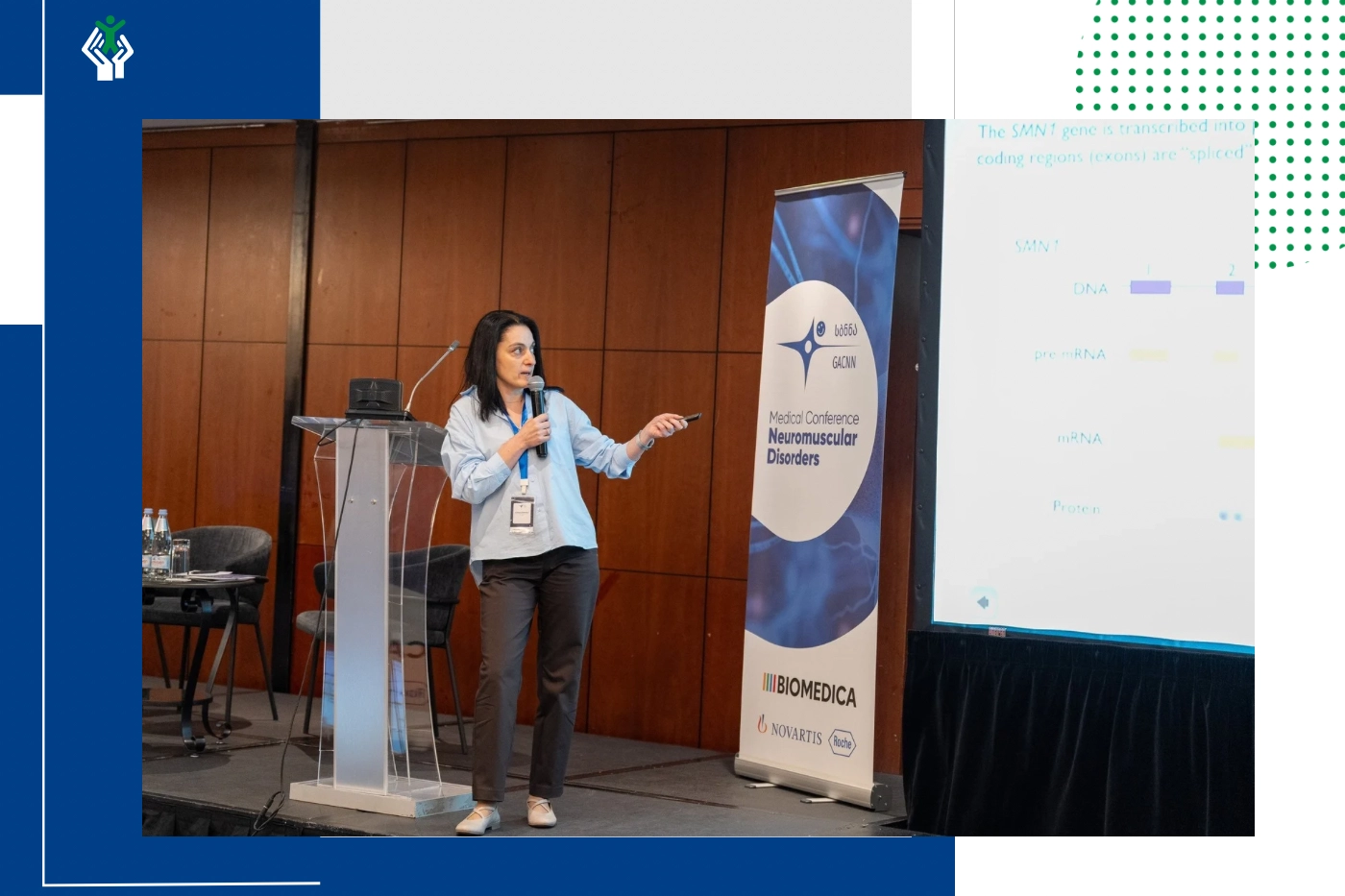
An international conference dedicated to neuromuscular diseases was held in Tbilisi. The conference addressed approaches to the management of patients with Duchenne muscular dystrophy and Spinal muscular atrophy, as well as modern treatment options. Neurologists from Armenia, Serbia, Bulgaria, Lithuania, Romania, Kazakhstan, and Russia participated in the conference. Biayna Sukhudyan, Head of the Neurology and Epileptology Service at Arabkir Medical Center, delivered a presentation on the genetic basis and mechanisms underlying spinal muscular atrophy. International exchange of experience and professional cooperation are of great importance for the development of the field and for improving the effectiveness of treatment. Arabkir Medical Center – A Reliable Partner in Health
Pneumonia Is a Common Diagnosis in Childhood
01 April
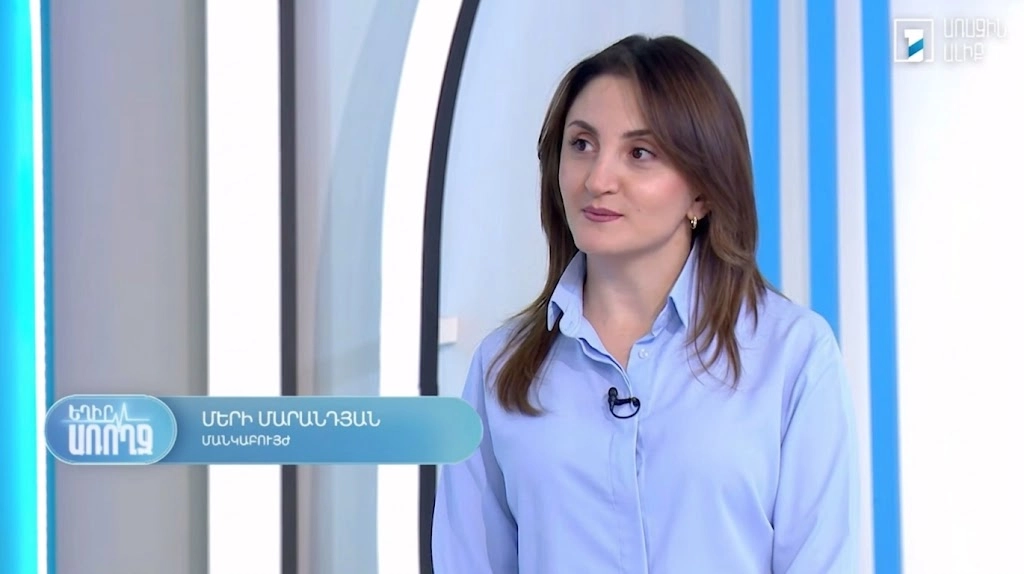
Meri Marandyan, pediatrician at Arabkir Medical Center, spoke about the causes, types, symptoms, and other aspects of pneumonia during the "Eghir Aroghj (Be Healthy)" project of the Public TV company of Armenia.Arabkir Medical Center: A Reliable Partner in Health
Information on Universal Health Insurance
01 April
Since January 1, 2026, more than 1.5 million people have become beneficiaries of universal health insurance. With the introduction of the new system, many citizens contact us with questions. Frequently asked questions are answered by Sona Hovhannisyan, Head of the Economic Service at Arabkir Medical Center.Can we receive medical care at Arabkir Medical Center within the framework of universal health insurance? Yes, you can. Arabkir Medical Center provides insured persons with both hospital services—including planned and emergency medical care and treatment, surgeries—as well as outpatient services, such as specialized consultations and laboratory and instrumental examinations. Where should I apply first to receive medical care within the framework of the program? The procedure is as follows: To receive services on a planned basis, it is necessary to apply to a primary health care unit (polyclinic) and obtain an appropriate referral. After that, the patient should visit the medical center in order to receive the service specified in the referral. In emergency cases, patients should apply directly to the hospital. Does the insurance program cover children? Yes. Universal health insurance covers RA citizens and residents in the following groups: Children under 18 years of age Persons aged 18–23 who have been left without parental care Persons under 26 years of age studying in full-time programs who have been left without parental care What should be done if the status of a universal health insurance beneficiary is not reflected in the ArMed system due to the absence of RA citizenship data? In such cases, it is recommended to contact the Universal Health Insurance Fund by calling the short number 8866 or by sending an email to [email protected]. The request should include the applicant’s signature and ID document, as well as the name, surname, patronymic, and date of birth. What specialized consultations are available within the framework of universal health insurance? Within the framework of universal health insurance, the following specialized consultations are available (for both children and adults): Neurologist Neurosurgeon, Allergist, Gastroenterologist, Rheumatologist, Orthopedist, Nephrologist, Urologist, General surgeon, Ophthalmologist, General Practitioner, Dermatologist Gynecologist, ENT specialist Pulmonologist Does the insurance also apply to children under dispensary supervision? Yes. Professional consultations, as well as the necessary laboratory and instrumental examinations provided to children under dispensary supervision, are also available within the framework of universal health insurance.